Chinelo
Hello Anindita, thank you so much for joining us. Could you please introduce yourself to our readers.
Anindita
My name is Anindita Mukherjee. I’m a PhD candidate in the Department of English and Film Studies at the University of Alberta, where I also teach in the capacity of an Assistant Lecturer. I teach courses on the introduction to critical analysis. I’m also a writing tutor at the University, so I wear many hats. But at the core, I would say I am very much a creative, critical writer. I am a practicing poet and translator, and for some time have been working to translate poetry from Bengali into English, as Bengali is my mother tongue. Bengali has a rich poetic tradition, yet it has received very little international attention. In general, I’m also very much interested in doing public humanities initiatives, not the elitist ones, you know, where I go and offer a talk or something like that, but more genuine engagement with the community, and more about thinking, about how to think as a community.
Chinelo
Thank you so much for helping us to get to know you better! It’s inspiring to hear about the many roles you take on as a PhD candidate, assistant lecturer, writing tutor, poet, and translator. Your dedication to translating Bengali poetry and making it accessible to a wider audience is especially meaningful. I also appreciate your emphasis on genuine community engagement and your desire to move beyond elitist forms of public humanities, and we can touch on some of those today. First, I hope it is okay to share with our readers that you are one of this years’ winner of the ACCUTE BIPOC Caucus’ Research and Community Engagement Award. Congratulations on winning the award and I wish you all the best as you continue to do great things both within and outside the classroom.
Anindita: Yes, absolutely. I am delighted and humbled to have won the award, and that my research and community engagement was worthy of this recognition is further humbling.
Chinelo
You indicated to me before we started that you’d like to talk about BIPOC teachers’ contributions in the classroom, especially as it relates to you, your own experiences of being a teacher in India, and transitioning to Canada, right?
Anindita
Yes. I completed my undergraduate degree in English at Presidency University, Calcutta, and then went to Jawaharlal Nehru University, New Delhi to pursue my Master’s in English. When I started my degree, I realized that, in general, there were not enough writing courses available to us. If I remember correctly, there were no academic writing centres in India either, besides a few elite private universities. So, I started providing peer tutor support to my peers, to help them as well as myself in the process. As a creative writer, I believe in generative imitation. I read academic articles to study and emulate their rhetorical moves and strategies, and I use teaching as a way to practice and refine those techniques in my own writing. I read a lot of world poetry and creative nonfiction to write, to harbour the words that are there; but in terms of academic writing, you cannot do that as much unless you have some kind of support, rigour, and expertise in doing that. What I knew about academic writing at that time myself was by reading and rewriting.
But then, when I started teaching as an Assistant Lecturer at the University of Alberta, I realized that a lot more needs to be done in the space of the classroom itself. I generally teach a white majority population, I would say Canadians, Europeans, and even students from the United States. There are other people from all over the world, of course — Indians, Latin Americans, and others in my class, but I teach a predominantly white section of society who are not exposed to what is happening in the rest of the world. What I have found is that their life experiences are siloed and uniform to the extent that when a teacher tries to teach literatures that they are unfamiliar with, even Indigenous literatures produced in Canada, there is a certain kind of pushback. There is also a lot of sheepish insinuation of nationalism and right-wing ideology in the classrooms, and this makes the work tougher for teachers like me trying to enter spaces where one is already an outsider and teaching “outsider texts” that are also not received well. Therefore, I realized that I needed to change some of my pedagogical principles.
One strategy I have used is to introduce students to David Foster Wallace’s video “Why Reading Feels So Hard, which encourages them to think more consciously about the processes and challenges of reading. I realized that students must be made aware of what goes on in the process of reading. Is reading just about looking at words on the page? No, it’s about being more aware of what happens when we read. I try to develop this kind of metacognition within them from the very beginning to make them aware that reading is difficult and that reading is work that must be approached carefully. I think I have had a degree of success with this because last semester, I had a student come to me and say, ” You know, Anindita, we enjoyed the class. We didn’t know so much about what exists outside of this world.” But then I also had another student who, unfortunately, I had to refer to the Dean of Students because they would talk about things in class that were unrelated to the course. The student was generally disruptive because they had preconceived ideas about what art is, what writing is, and I think sometimes that could be cultural. However, the repetitive disruption made me think that when the instructor is brown, black or coloured and young or not considered old and white enough, they think somehow, they have an upper hand in class discussions. When I spoke with the Dean of Students, they told me that, unfortunately, this has become a common situation at present. Many instructors, especially women, encounter students who identify as men and attempt to dominate classroom discussions or assert an upper hand in conversations. Until then, I hadn’t thought about my identity as a BIPOC (Black Indigenous and People of Colour) teacher as such. And probably no one does until they encounter bias at point-blank range. After that experience, I have been learning to navigate those streams generatively. I did say to the Dean that I did not want any punishment for my student, except that they should be made to understand the expectations around conversations in an academic setting. I would say that there are both pleasures and perils to being a BIPOC teacher. You learn from the diverse voices around you, but also constantly have to navigate structural biases and expectations.
Chinelo
I hear you and think you handled the situation(s) very well. I have had some of those sorts of experiences and don’t know if they have gotten easier for me to deal with over time. But that is one of the reasons I love this BIPOC ACCUTE space and community so much. I have had the opportunity to meet, learn from, and laugh with people who have been in the business much longer. One would think that after a while, you learn the perfect responses for students when they decide to pick on you, but I honestly think that students are too clever by far and are constantly inventing new ways of getting at their professors. I’ve had those kinds of moments where I went to the head of the department and others when I just took a deep breath and left the problem for another day.
And you’re right! I have also found that those sorts of incidents seem to happen more when it’s a woman and when it’s a “person of colour.” It is those times that one hopes that there are institutional ways of addressing such problems. It should not entirely be the responsibility of faculty members to deal with such problems after all, when we go to other public spaces, like hospitals, there are usually signs there warning people against bullying staff. I think there should be the same kind of protection for faculty and for students as well.
Anindita
That’s true. You raised a very important point about awareness, and it’s something I have been thinking about. I’m happy that when I had to report that student that I mentioned, the Dean was very helpful. But there is an underlying structural cause, I believe, besides what is happening, because of the gap between high school learning and university-level learning. As a way to bridge the gap between the two spaces, I would particularly say universities should have a month-long bridge program before/when students join the university. Students really do need that because sometimes they don’t know what appropriate behaviour is. For my part, when I encounter a situation like that, I try to write a low-stakes informal e-mail about acceptable behaviour in a university setting, but I also share some resources with the students. I typically share a classroom agreement adapted from my teacher Dr. Terri Tomsky‘s course policy. It provides students with guidance on practical matters—such as how to write a professional email (many genuinely do not know)—as well as outlines expectations regarding attendance, grievances, students’ rights and responsibilities, and what constitutes racist, sexist, or otherwise offensive behaviour. It also makes clear that I have zero tolerance for discrimination and harassment. But this information should not be at the course level alone but must be built in as part of the academic code of conduct. The absence of that means that I have to take on the responsibility of teaching appropriate behaviour and facing the consequences of things that I’m not responsible for. I try to do them though as much as possible.
Chinelo
I’m not entirely sure, but I think some institutions have the sort of bridge program you describe. And I do agree with you that it would be useful for universities to recognize this as a responsibility.
The other thing I wanted to say that has worked for me as a Black faculty is using Chimamanda Ngozi Adichie’s The Danger of a Single Story or David Takacs’ “How Does Your Positionality Bias Your Epistemology?”; they both emphasize the importance of recognizing different worldviews. As you said earlier, people are often not aware of what the world is like outside of their immediate contexts, and I’ve found that it helps to let them know that the world is really quite big.
Anindita
Exactly. Every day, I learn a lot from my students; they bring such varied perspectives to my table.
Outside of the structural biases that come inside the classroom, there is also now a push, almost a bureaucratic push in many higher education institutions in the world, towards a client-based model of education. What I mean by a client-based model of education is that the student at the end of the semester is expected to be happy, just as in any business organization. But teachers are not service providers. I am a teacher, and I have a necessary and ethical obligation to students to actually educate them.
Chinelo
I do agree with you and can’t say that I have not observed the trend you talked about. I can’t also say that I am not sometimes in danger of falling into that trap, but I recognize that while it’s valuable to be attentive to student needs and satisfaction, education should be recognized as fundamentally different from a typical business transaction. Teachers are after all not service providers in that sense. In any case, from being a long-term student myself, I have found that true learning often involves being challenged, which may not always align with being comfortable.
But I was also wondering, as you were speaking, how you would compare the students you have to the ones you taught pro bono in India.
Anindita
Well, let me try. My “students” were my peers, so they were not really like professionally my students. I tried to do a three-day workshop for them about academic writing, but then I think the department realized that they needed more support for us, because I was a student too. But doing that work helped me to see my writing in a detached way. As a student, looking back, I would say most English departments in India, regardless of whether they were government or private, are elitist spaces. There was a lack of institutional support and some classes were unstructured. The feedback culture, at least at the undergraduate level where I studied, was completely non-existent, and if you’re offered feedback, people took it offensively. This is an effect of the client-based model that I mentioned. Your clients don’t want to be sad, so you must make sure that they’re happy at the end of the day, right? You may notice that some students prefer to meet with their instructors not before, but after, they have received their grades—especially when those grades are lower than they had hoped. However, I think it is entirely appropriate for students to speak with their instructors about the grade they hope to achieve and to be willing to put in the work required to reach that goal. That effort is an important part of the learning process. As I always tell my students, a grade cannot be “offered”; it must be “earned.”
Chinelo
It feels like I did my undergraduate studies a really long time ago, and in Nigeria. I don’t think there was a formal feedback system then, and I don’t even know that I cared. I probably would have done better with some useful feedback, but I think I was really more interested in just receiving the number grades at that time. I also went to a government university, and the lecturers followed the British system and were really hard graders. I think they still are.
Now, from an instructor perspective, I don’t know if feedback is better received here to be honest. One of the earlier trainings I got when I came to Canada was on the “sandwich” feedback system. It’s potentially a good approach, but I don’t know how well that works for present-day students or if it is appropriate for every type of learner. So, I have been really trying to structure feedback based on my understanding of each student or group. It also often depends on the course. And since one does not know if students are reading the feedback, it’s probably better, as you suggested, to get students to see their instructors regularly rather than only when they want to discuss or dispute grades.
Before we close, I was wondering if you have any final words of wisdom for other grad students, emerging scholars, or international students.
Anindita
I would say think about anything you want to set your feet on early. And if you are a woman, not from a city or other elite spaces, lack cultural capital, or belong to a marginalized background, don’t be afraid. Don’t give in to the lure of objectified cultural capital. I was afraid at first when I travelled from my village to Calcutta, but it helped to be prepared. I would also say read as if there is nothing beyond reading and make sure that you are the best-read person in any room you enter. Reading will make you confident, humble, and unafraid. Just read. Reading helps to move into and unlock may worlds.
I was the only Brown student in my cohort. During orientation, several of my peers assumed I was a master’s student, partly because I look quite young and am shorter than many of them. They were surprised to learn that I had entered the PhD program at such a young age. You know, these are all about structural optics, and sometimes in academic circles, I am expected to be representative of India or South Asia, and I do identify as one. However, the underlying question that I learnt to ask after listening to one of my favourite cultural theorists, Catherine Liu, is, ” Who elected me to be their representative?” Sometimes, those spaces also expect a person belonging to a particular geographical or cultural identity to do iterative research that only amplifies their sense of identity. There is quite some merit to it, but genuine and serious intellectual exercise is not limited to geographical regions but can surely be influenced by them. Creative and critical expertise cannot be simply dependent on one’s ethnic or cultural identity. I think that kind of thinking is highly colonial, restrictive, and anti-intellectual.
Here, I am speaking for myself, and my experiences may not be universal. But if students, researchers, and scholars reading this piece are thinking about starting a project, I would surely tell them to start anywhere and continue it rigorously. Learning is not a hobby, and requires serious and arduous work, which also includes facing oneself, one’s assumptions, expectations, be it cultural, political, historical, or intellectual, every day. That is genuine work, for me.
Chinelo
Thank you so much for your words and for reaching out to have this conversation with us, Anindita! I have been hoping to have more BIPOC English scholars join us from outside Ontario, so it was really exciting for me to meet and chat with you. The experiences and perspectives that you have generously shared with us are invaluable. I am also intrigued by the pro bono teaching you were doing in India and think that there are ways you can continue that here. My university has, as part of its internationalization project, opportunities for faculty members to teach collaboratively with other others outside Canada. It is called COIL (Collaborative International Online Learning). I think it’s something worth looking into. It is multiculturalism and diversity in action, right? And one could also tailor it towards international students intending to study in North America, just to prepare them in advance for being in new/different social, scholarly, and academic spaces.
Anindita
That sounds like a fantastic resource and an important initiative. Thanks for sharing it with me. I think it serves as an excellent preparatory and exploratory resource, and I hope that many students who are differentially positioned in terms of academic opportunity due to unequal access to resources will continue to benefit from it. I’ll be sure to share it with my community members and students.
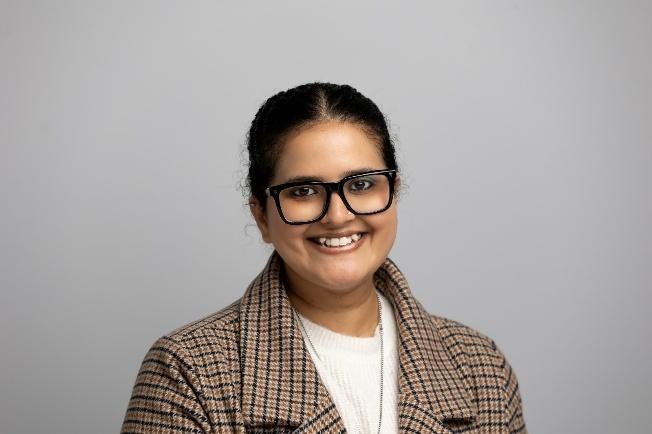
Anindita Mukherjee is a PhD Candidate and Assistant Lecturer in the Department of English and Film Studies at the University of Alberta. She is also a writer and translator whose poems, translations, and critical essays have appeared in Guernica Editions, The Antonym, The Lake, Poetry Pause: The League of Canadian Poets, Pamenar Press, and The Paris Institute for Critical Thinking, among other venues, with forthcoming work in The Massachusetts Review.
Categories: BIPOC Caucus, Uncategorized